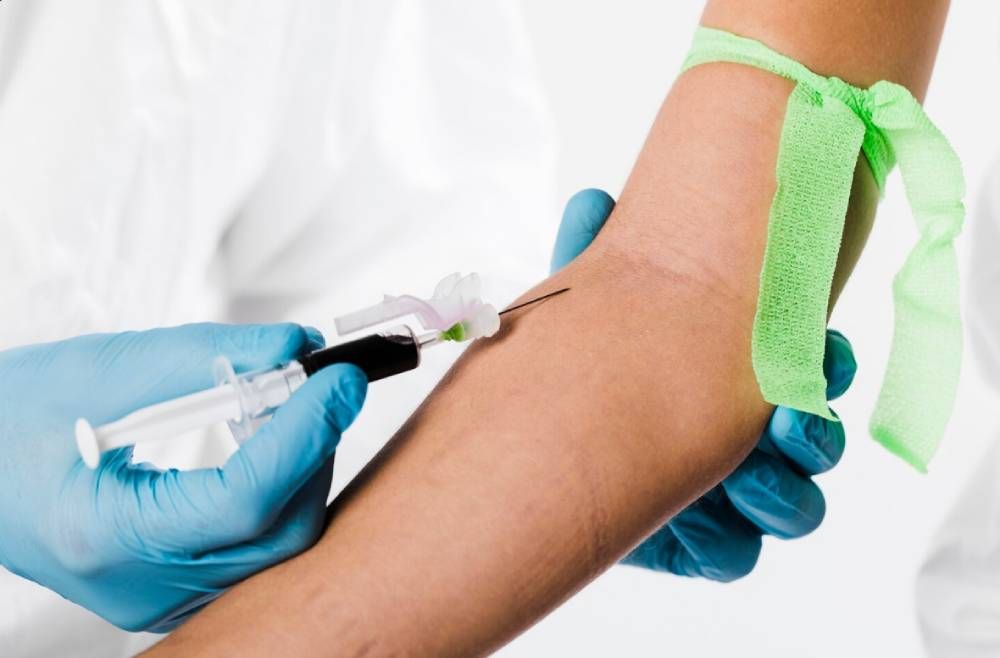

Book a Home Collection Now!
Understanding Infertility and How It Is Diagnosed
October 16, 2026 - By Lupin Diagnostics
Trying to conceive can feel overwhelming when months pass without results. An infertility diagnosis helps identify what's happening, and more importantly, what can be done. Globally, infertility affects roughly 1 in 6 people of reproductive age. This article answers the questions "what is infertility?" and "when to seek help," and covers the tests involved for both partners.
Understanding how infertility is diagnosed can make the process feel more manageable and help couples know what to expect at each stage. From medical history and physical examinations to fertility tests and imaging, the diagnostic process is designed to identify potential factors affecting conception and guide the next steps in care.
What Is Infertility and What Are the Diagnostic Criteria?
In simple terms, infertility means not achieving pregnancy despite regular, unprotected intercourse over a defined period. The timeline depends on age:
| Factor | Under 35 Years | 35 Years and Older |
|---|---|---|
| Evaluation after | 12 months | 6 months |
| Urgency | Standard | Expedited |
There are two types to know about:
- Primary infertility means a person has never achieved a pregnancy.
- Secondary infertility means difficulty conceiving after a previous pregnancy. This is actually the more common form globally, often linked to reproductive tract infections.
Understanding these infertility diagnostic criteria gives both partners a clear starting point for evaluation. Your doctor can help determine which category applies to your situation.
When Should You See a Fertility Specialist?
Age-based timelines are a helpful guide. Women above 40 may benefit from more immediate evaluation. But certain signs warrant earlier testing regardless of age:
- Irregular or absent menstrual cycles
- A history of pelvic inflammatory disease (PID)
- Known conditions like varicocele in men
- Prior abdominal or pelvic surgeries
- Two or more pregnancy losses
Both partners should be evaluated at the same time. Simultaneous testing avoids delays and gives a complete picture sooner. A fertility specialist can guide you on which tests to prioritise based on your medical history.
How Is Infertility Diagnosed in Both Partners?
A common misconception is that fertility challenges are one-sided. Research tells a different story. A WHO multi-country study found female factors alone in about 31% of cases. Male factors alone accounted for roughly 19%. Both partners contributed in about 26% of couples. In nearly 11% of cases, no cause was identified. This is exactly why testing both partners matters equally from day one.
Tests for Female Infertility
The evaluation typically starts with blood tests and imaging:
- Hormone blood tests: FSH, LH, thyroid-stimulating hormone (TSH) test, and prolactin levels help assess ovulation. Anti-Müllerian Hormone (AMH) test indicates ovarian reserve.
- Transvaginal ultrasound: This checks ovarian health and uterine structure without any incisions.
- Hysterosalpingography (HSG): A special X-ray that checks whether the fallopian tubes are open. It also reveals major uterine abnormalities.
- Saline sonohysterography: Saline is used to get a clearer ultrasound image of the uterine cavity.
Tests for Male Infertility
Semen analysis is the cornerstone of male evaluation. It measures three key parameters:
- Sperm count: The number of sperm per millilitre
- Motility: How well sperm move
- Morphology: Sperm shape and structure
If results are abnormal, further tests may include scrotal ultrasound, hormone testing for testosterone and FSH, and genetic panels. Environmental and lifestyle factors are also reviewed.
Specialised and Advanced Procedures
When initial tests don't reveal a clear cause, doctors may recommend advanced procedures:
- Diagnostic laparoscopy helps identify endometriosis and pelvic adhesions that imaging might miss.
- Hysteroscopy provides a direct view of the uterus to detect polyps or fibroids.
- Genetic karyotyping is considered for couples with recurrent pregnancy losses.
These procedures are typically reserved for selected cases. Your specialist will recommend them only when clinically appropriate.
What Does Unexplained Infertility Mean?
Sometimes, every standard test comes back normal, yet pregnancy doesn't happen. This occurs in about 15% of couples. Doctors call this "unexplained infertility," essentially a diagnosis of exclusion.
The encouraging part? Many such couples do conceive naturally over time. Studies suggest roughly 15% conceive within one year and 35% within two years without treatment. Treatment options like ovulation support or assisted reproduction can further improve these odds. Talk with your fertility specialist about a plan that fits your situation.
Taking the First Step Toward Answers
Understanding how infertility is diagnosed removes much of the uncertainty. Whether the cause lies with one partner, both, or remains unexplained, modern diagnostics offer clear pathways forward. Early evaluation, especially after 35, gives you more time and more options.
If you're considering fertility-related blood work or hormone testing, Lupin Diagnostics offers a wide range of tests at NABL-accredited labs across India, with home collection services for added convenience.
Frequently Asked Questions
How long does an infertility evaluation take?
A basic workup typically takes one to four weeks. The exact duration depends on the timing of the menstrual cycle and test scheduling.
What is the first test done for infertility?
For men, semen analysis is usually the starting point. For women, confirmation of ovulation through hormone tests like FSH and LH comes first.
Is an HSG test painful during diagnosis?
HSG may cause discomfort during and shortly after the procedure. Reported pain scores often range from 3.7 to 5.0 on a 10-point scale.
Can blood tests detect all fertility issues?
Blood tests effectively assess hormones and ovarian reserve. However, structural issues require imaging tests such as ultrasound or HSG for detection.
What defines unexplained infertility?
It is diagnosed when standard investigations — semen analysis, tubal patency tests, and ovulation assessment — fail to identify any abnormality. It is a diagnosis of exclusion.
Does insurance cover infertility testing?
Coverage varies by provider and policy. In India, most diagnostic fertility tests are typically self-funded. Check with your insurer for specific details.
This article is for informational and educational purposes only. It does not substitute for professional medical advice, diagnosis, or treatment. Please consult a qualified healthcare provider for any concerns related to fertility or reproductive health.
Featured Articles
Diabetes Screening For Diagnosis And Prevention
Posted on: 25th Oct 2023

Eating To Recover: The Best Foods For Getting Back On Your Feet After Cholera
Posted on: 22nd Jan 2026

What A Complete Blood Count (CBC) Tells You About Your Health
Posted on: 22nd Jan 2026