Book a Home Collection Now!
How Is Graves' Disease Diagnosed? The Essential Blood Tests You Need
September 17, 2026 - By Lupin Diagnostics
Unexplained weight loss, a racing heart, or constant anxiety can feel unsettling. These symptoms often point to an overactive thyroid. Knowing how to diagnose Graves' disease early helps prevent serious complications. This article walks you through the clinical checks, blood tests, and imaging that doctors use to confirm this autoimmune thyroid disorder.
What Is Graves' Disease?
Graves' disease is an autoimmune condition. Your immune system produces abnormal antibodies that latch onto thyroid receptors. These antibodies mimic thyroid-stimulating hormone (TSH). Your thyroid gland goes into overdrive, producing far more hormones than your body needs.
This matters because Graves' disease is not just any thyroid issue. It causes 60–80% of all hyperthyroidism cases. While other conditions can also make the thyroid overactive, the autoimmune trigger sets Graves' apart.
How Does a Doctor Begin Diagnosing Graves' Disease?
Before ordering any blood work, your doctor starts with your history and a physical exam. A family history of thyroid problems is an important clue. Here is what the clinical check-up typically covers:
- Goitre: The doctor feels your neck for an enlarged thyroid gland.
- Eye changes: Bulging eyes, double vision, or swelling around the eyes (called Graves' ophthalmopathy) are strong indicators.
- Skin and extremities: Skin thickening on the shins or soft-tissue swelling of the hands may appear.
- Vital signs: A rapid pulse, tremors, and warm, moist skin suggest excess thyroid hormones.
These findings guide the doctor toward the right tests for diagnosing Graves' disease.
Also Read: Psychological Impact of Thyroid Disorders: What to Expect
What Are the Essential Blood Tests for Graves' Disease?
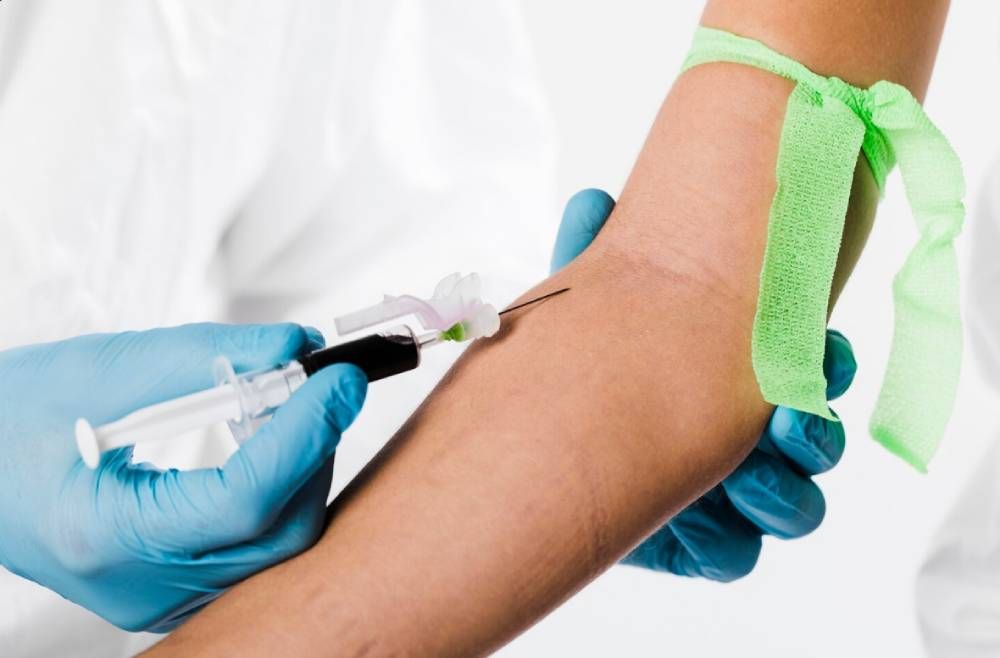
Blood work forms the backbone of a confirmed diagnosis. Here are the key tests your doctor will likely order:
1. Thyroid-Stimulating Hormone (TSH) Test
Thyroid-stimulating hormone (TSH) test is the first marker checked. In Graves' disease, excess thyroid hormones send negative feedback to the pituitary gland. This pushes TSH levels down, often below 0.1 mIU/L. A suppressed TSH is the strongest initial red flag.
2. Free T4 and Free T3 Tests
If TSH is low, the next step measures circulating hormone levels. Free T4 (thyroxine) and free T3 (triiodothyronine) are typically elevated. Sometimes TSH is low, but free T4 stays normal. In such cases, free T3 helps detect a condition called T3-toxicosis.
3. Thyroid-Stimulating Immunoglobulin (TSI) Assay
While TSH and thyroid hormones confirm hyperthyroidism, they do not reveal the cause. The thyroid-stimulating immunoglobulin (TSI) test does. It measures the specific autoantibodies that bind to TSH receptors and force the thyroid to overproduce hormones. This makes TSI a disease-specific marker for Graves' disease.
4. TSH Receptor Antibodies (TRAb)
The TSH receptor antibodies (TRAb) test casts a wider net. It detects all types of antibodies targeting the TSH receptor. Third-generation TRAb assays offer 97% sensitivity and 99% specificity. That means a positive result almost certainly confirms Graves' disease. Doctors may use TRAb when TSI results need further clarification.
Your doctor will interpret these results based on your individual clinical picture.
5. Anti-TPO and Anti-Thyroglobulin Antibodies
These supplementary tests help rule out other autoimmune thyroid conditions. Elevated TRAb alongside anti-TPO levels helps distinguish Graves' disease from Hashimoto's thyroiditis or painless thyroiditis. They are not primary diagnostic markers but add clarity when the diagnosis is uncertain.
Diagnostic Blood Test Markers: A Quick Reference
The table below summarises what each blood test typically shows in Graves' disease.
| Biomarker | Typical Graves' Result | Normal Reference Range | Why It Matters |
|---|---|---|---|
| TSH | Suppressed (< 0.1 mIU/L) | 0.4–4.8 mIU/L | Primary screening marker |
| Free T4 | Elevated | 0.8–1.9 ng/dL | Confirms hyperthyroidism severity |
| Free T3 | Elevated | 3.2 to 6.8 pmol/L | Detects T3-dominant thyrotoxicosis |
| TRAb | Positive/Elevated | < 1.75 IU/L | Confirms autoimmune cause |
| TSI | Positive/Elevated | < 0.55 IU/L | Disease-specific marker |
Reference ranges may vary by laboratory, so always compare your results with your lab's specific values.
When Is Imaging Needed Beyond Blood Tests?
Sometimes blood tests alone don't paint the full picture. In such cases, your doctor may recommend imaging to confirm the diagnosis and rule out other causes.
Key imaging tools include:
- Radioactive Iodine Uptake (RAIU) scan: In Graves' disease, the thyroid absorbs iodine aggressively. Normal uptake is 8–25% at 24 hours. A diffusely elevated uptake strongly suggests Graves' disease. Nearly absent uptake, on the other hand, points towards thyroiditis
- Thyroid ultrasound with colour Doppler: Helps visualise blood flow patterns and gland size without radiation
- MRI or CT scan: Reserved for severe eye symptoms to assess the extent of ophthalmopathy
Imaging decisions should always be made by your treating doctor based on your clinical picture.
How Do Doctors Rule Out Other Causes of Hyperthyroidism?
An overactive thyroid doesn't always mean Graves' disease. Your doctor needs to distinguish it from other conditions, such as:
- Toxic multinodular goitre: Multiple overactive nodules cause excess hormone production
- Solitary toxic adenoma: A single overactive nodule drives hyperthyroidism
- Subacute thyroiditis: Temporary inflammation releases stored hormones
- Medication-induced thyrotoxicosis: Certain medicines can trigger excess thyroid hormone levels
The combination of antibody tests (TSI or TRAb) and RAIU patterns usually helps doctors pinpoint the exact cause. A positive antibody test with diffuse high uptake on RAIU is characteristic of Graves' disease.
How Should You Prepare for Thyroid Blood Tests?
A few practical steps can help ensure your results are accurate:
- Stop biotin supplements at least two days before your test. Biotin can interfere with thyroid function tests.
- Schedule a morning appointment for consistent results.
- Share your full medication list with the lab or your doctor, including supplements and over-the-counter medicines.
Please discuss any medication changes with your healthcare provider before your test.
Taking the Next Step After Diagnosis
Understanding how to diagnose Graves' disease puts you in a stronger position to work with your endocrinologist. A suppressed TSH, elevated thyroid hormones, and positive TRAb or TSI results together paint a clear picture. Early, accurate diagnosis opens the door to timely care. Treatment decisions should always be made in consultation with a qualified specialist.
If you would like to get your thyroid levels or antibody markers checked, Lupin Diagnostics offers comprehensive thyroid panels at NABL-accredited labs and convenient home collection services across India.
Frequently Asked Questions
Can you have Graves' disease with normal TSH levels?
In early or subclinical hyperthyroidism, TSH is suppressed, but free T4 and free T3 remain within the normal range. A truly normal TSH level essentially rules out active Graves' disease.
What is the single most accurate test for Graves' disease?
The third-generation TRAb assay is considered the most accurate single test, with 97% sensitivity and 99% specificity for confirming the diagnosis.
How long does it take to get thyroid blood test results back?
Standard TSH and free T4 results are usually available within 24 to 48 hours. Specialised antibody tests such as TRAb or TSI may take a few additional days.
Does biotin interfere with Graves' disease blood tests?
Yes, biotin can cause false readings on certain immunoassay platforms used for thyroid function tests. Pausing biotin supplements at least two days before testing is recommended.
Is a scan always necessary to diagnose Graves' disease?
A scan is not always required. Diagnosis is usually confirmed through clinical findings and blood tests. Imaging is used when results are unclear or other causes need to be ruled out.
What is the difference between TSI and TRAb blood tests?
TRAb assays detect all types of TSH receptor antibodies without distinguishing between them. TSI assays specifically measure only the stimulating antibodies that drive thyroid overactivity.
This article is for informational purposes only and does not substitute professional medical advice, diagnosis, or treatment. If you have concerns about your thyroid health or symptoms, please consult a qualified healthcare provider.
Featured Articles
Sleep Deprivation Effects How Poor Sleep Impacts Your Heart And Kidney Health
Posted on: 22nd Jan 2026
What A Complete Blood Count (CBC) Tells You About Your Health
Posted on: 22nd Jan 2026

Screen Time Fatigue And Vitamin D Deficiency The Hidden Connection You Shouldn T Ignore
Posted on: 22nd Jan 2026