Book a Home Collection Now!
Follicle Stimulating Hormone Test Understanding Fsh Levels By Age
July 16, 2024 - By Lupin Diagnostics
What is follicle-stimulating hormone test?
Follicle-Stimulating Hormone (FSH) plays a crucial role in the female reproductive system by promoting the growth of ovarian follicles. These follicles are responsible for producing estrogen and progesterone in the ovaries, which are important for women’s regular menstrual cycles. Additionally, FSH is involved in the development of the gonads and sperm production in men.
The FSH test is used to determine the amount of FSH circulating in your blood. Your healthcare provider may order an FSH test to identify the root cause of symptoms affecting the reproductive system.
Why is the FSH test performed?
An FSH test involves a simple blood test. Those who are at risk of fertility issues often have the FSH test done frequently. Factors that can increase the risk of infertility and may affect reproductive health include:
• Irregular periods
• Difficulty in conceiving
• Infertility
• Early or delayed puberty
• Sudden weight gain
• Reduced or increased appetite
• Low sperm count
Women who have elevated FSH levels may experience mood swings, irritability, hormonal imbalances, fatigue, irregular periods, etc. They may be instructed to take this test during a specific period in their menstrual cycle, usually within the first few days.
FSH test for women
The most frequent cause for conducting an FSH test in women include:
Evaluating issues related to infertility
Assessing irregular menstrual cycles
Diagnosing disorders affecting the pituitary gland
Diagnosing diseases involving the ovaries
FSH test for men
An FSH test in males may be conducted for
Assessing a decreased sperm count
Evaluating hypogonadism or gonadal failure
Assessing testicular dysfunction
FSH test for children
An FSH test can help determine if a child is experiencing precocious puberty (early puberty). Also, it may help confirm the diagnosis of delayed puberty, when sexual characteristics or organs fail to develop at the expected time.
Test procedure
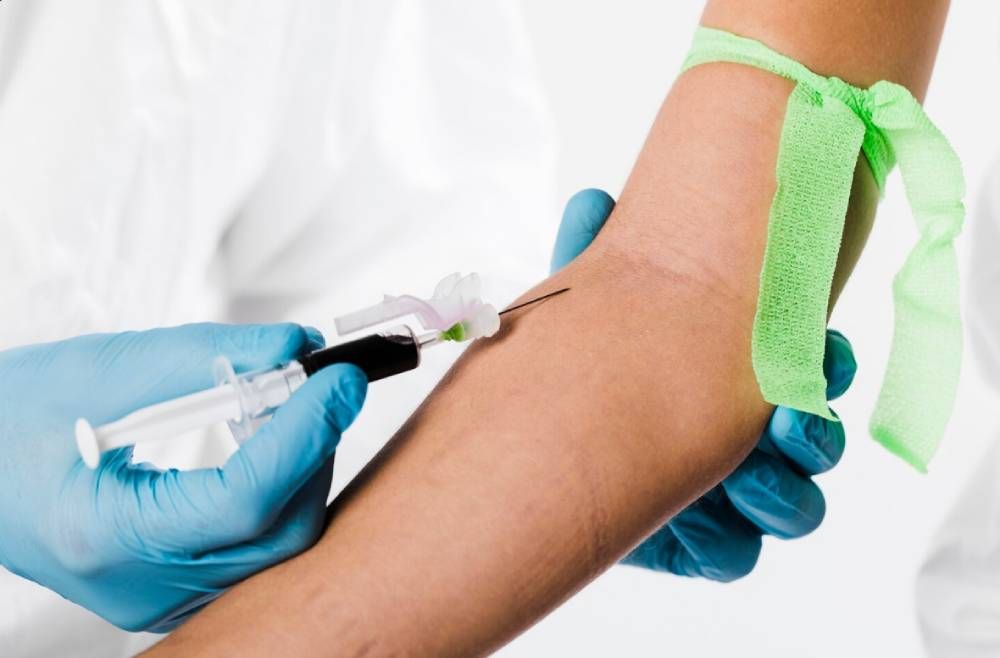
Your healthcare provider will take a blood sample from a vein in your arm. They might use an elastic band to find your veins easily by tying it around your upper arm. Next, they will clean a small area of skin using an antiseptic wipe. Then, they will insert a needle into your skin and draw out some blood for testing purposes. Finally, the sample will be transferred to the laboratory for the analysis procedure.
Before you are required to take the FSH test, it is necessary for you to discuss with your healthcare provider all prescribed as well as over-the-counter medications, dietary supplements, and vitamins that you are currently taking. In addition, let your doctor know about the kind of birth control you use, whether it is a pill, an intrauterine device, or a patch, as it could impact the results of the test.
Inform your healthcare provider about any medical disorders you currently have, such as:
Uncontrolled thyroid disease
Sex-dependent hormone tumours
Ovarian cysts
Unusual vaginal bleeding
Understanding your FSH test results
Normal FSH ranges in females
Normal FSH levels | |
Before puberty |
0–4 IU/L |
During puberty |
0.3–10 IU/L |
While still menstruating |
4.7–21.5 IU/L |
After menopause |
25.8–134.8 IU/L |
The levels of FSH in a menstruating woman will fluctuate during different phases of the menstrual cycle.
Menstrual cycle stage |
Normal FSH levels |
Follicular |
1–9 IU/L |
Midcycle |
6–26 IU/L |
Luteal |
1–9 IU/L |
Elevated FSH levels in women may imply a decrease in ovarian function, menopause, polycystic ovarian syndrome or a chromosomal abnormality like Turner's syndrome. Additionally, an increase in FSH could indicate a decrease in the production of high-quality eggs and embryos, which is often associated with aging.
The FSH testing when combined with tests for luteinizing hormone, estradiol and progesterone levels can help in determining a woman’s ovarian reserve. Ovarian reserve refers to the quantity of fertile eggs present in the ovaries. If there is an increase in the level of FSH, it suggests that the likelihood of achieving pregnancy may be lower than anticipated for your age. However, this does not mean that conception is impossible, but rather that it may be more challenging and may require infertility treatments.
Normal FSH ranges in males
Age |
FSH range |
Before puberty |
0—5 IU/L |
During puberty |
0.3—10 IU/L |
Adulthood |
1.5—12.4 IU/L |
Elevated FSH values in males may suggest various conditions. One of these possible conditions is Klinefelter’s syndrome, which is a rare condition as a result of extra X chromosome causing serious male development problems. Another reason could be the absence or improper functioning of the testicles. Additionally, damage of your testes can occur due to reasons like dependency on alcohol , diseases or medications such as radiations or chemotherapy treatment.
Increased FSH levels in children might signal the onset of puberty.
Low FSH levels in adults may be caused due to
A lack of egg production in women.
Insufficient sperm production in men.
Dysfunction in the hypothalamus or pituitary gland, which are responsible for regulating hormone production in the brain.
A tumour may disrupt the brain's ability to control FSH production.
Risks and considerations
The FSH test is a simple blood test that only requires a small blood sample, posing minimal risks. Following the test, individuals can generally resume their daily activities without any issues. One limitation of hormone testing is that hormone levels vary throughout the day and over several days. Therefore, testing a blood sample for hormones only provides a momentary snapshot of their levels. Also, certain medications can affect FSH levels. To ensure accurate results, you should inform your healthcare provider about all the medicines or herbal supplements you take.
FSH testing is essential for the diagnosis of different conditions. Increased FSH levels may suggest menopause, primary ovarian insufficiency, or testicular failure, whereas decreased levels may indicate pituitary or hypothalamic dysfunction. The interpretation of FSH results, when combined with clinical symptoms, can aid in guiding treatment approaches to ensure the proper management of reproductive health and hormonal balance.
Featured Articles
Diabetes Screening For Diagnosis And Prevention
Posted on: 25th Oct 2023

Eating To Recover: The Best Foods For Getting Back On Your Feet After Cholera
Posted on: 22nd Jan 2026

What A Complete Blood Count (CBC) Tells You About Your Health
Posted on: 22nd Jan 2026