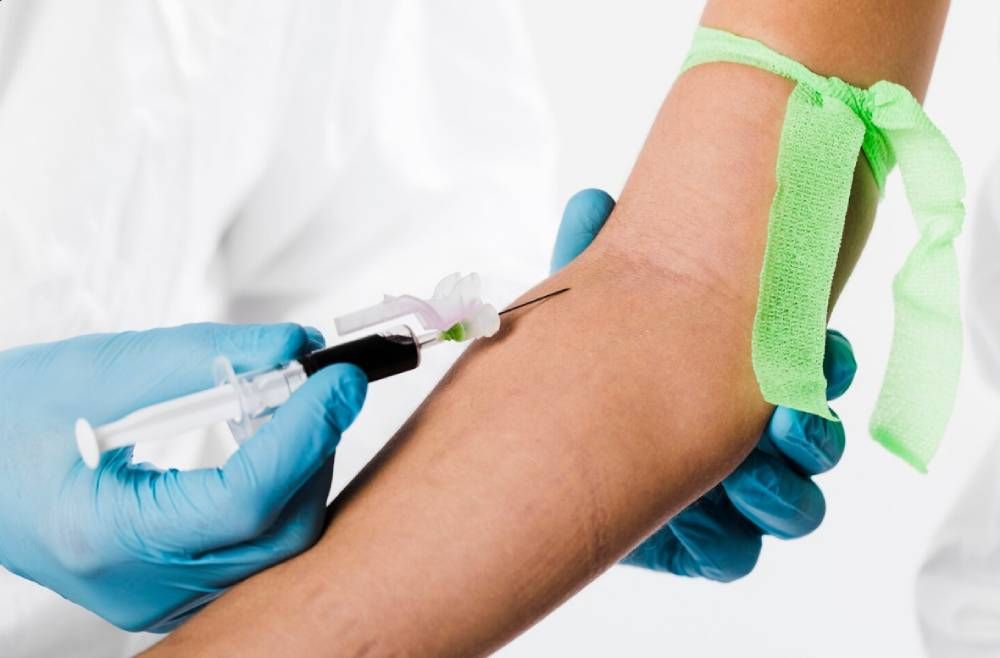
Book a Home Collection Now!
Beta hCG Test for Pregnancy & Beta hCG Level Guide
October 23, 2026 - By Lupin Diagnostics
A missed period, a wave of nausea, or just a quiet hunch, the beta hCG test for pregnancy is often the first step towards confirming what you suspect. This hormone, Human Chorionic Gonadotropin (hCG), is produced shortly after a fertilised egg implants. This guide covers how the test works, what your numbers mean, and why the trend matters more than any single reading.
What Is a Beta hCG Test for Pregnancy?
A Beta hCG test is a sensitive medical test that measures the amount of human chorionic gonadotropin (hCG)-a hormone made during pregnancy-in your blood or urine. Because it detects even tiny levels of this hormone, it helps confirm pregnancy earlier than regular tests and allows doctors to track your baby's early growth.
hCG is a protein made up of two parts, an alpha and a beta subunit. The beta subunit is unique to pregnancy. This is what the test measures.
There are two types of beta hCG tests, and they serve different purposes:
| Feature | Qualitative Test | Quantitative Test |
|---|---|---|
| What it tells you | Yes or No (pregnant or not) | Exact hCG concentration in blood |
| Sample type | Urine or blood | Blood (serum) only |
| Sensitivity | Detects hCG at 20-50 mIU/mL | Detects levels as low as 1-2 mIU/mL |
| Best used for | Initial confirmation | Monitoring pregnancy progression |
A home pregnancy kit is a qualitative test. Your doctor orders the quantitative serum beta-hCG test to track exactly how your levels change over time.
When and Why Should You Get a Beta hCG Blood Test?
Your doctor may recommend a quantitative blood test in several situations.
Common reasons include:
- Early confirmation: when a urine test is unclear or too early to show results
- Tracking IVF or IUI cycles: to confirm implantation after fertility treatment
- Unexplained bleeding or pain: to check whether hCG levels are rising normally
- Suspected ectopic pregnancy: where the embryo implants outside the uterus
- Risk of miscarriage: when levels need serial monitoring
Once beta-hCG crosses roughly 1,500 mIU/mL, a transvaginal ultrasound can usually detect an intrauterine pregnancy. Below that threshold, blood tests remain the primary tracking tool.
How Do Beta hCG Levels in Early Pregnancy Change?
Beta hCG levels in early pregnancy rise rapidly at first. During the initial 6 weeks after conception, levels roughly double every 2 days. After that, the doubling slows, averaging about every 4 to 5 days between weeks 6 and 8 after conception.
Levels typically peak around 10 weeks of gestational age. They then gradually decline and stabilise for the rest of the pregnancy.
Here is a key point many people overlook: individual variation is enormous. At just six weeks from the last menstrual period, hCG can range from 440 to over 142,000 IU/L, even among women who go on to have healthy, full-term deliveries. Your lab's reference range is a better guide than any generic chart. Please discuss your specific results with your obstetrician or gynaecologist.
The 48-to-72 Hour Doubling Rule
Doctors look for approximate doubling of hCG every 48 hours during the early first trimester. This pattern reassures them that the pregnancy is progressing well.
A rise of less than 53% over 48 hours may raise concern. However, a single slow rise does not confirm a problem. That is why serial testing — repeat blood draws every two to three days — provides a much clearer picture than a single reading.
What Do Your Beta hCG Numbers Mean?
Interpreting a normal range of beta hCG in pregnancy requires context. A general guide:
- Below 5 mIU/mL — Considered negative for pregnancy
- 5 to 25 mIU/mL — A grey area; your doctor will likely ask you to repeat the test in 48–72 hours
- Above 25 mIU/mL — Typically positive for pregnancy
An elevated number alone does not confirm a healthy pregnancy. Similarly, a low reading does not always mean something is wrong. Your healthcare provider will interpret results alongside your symptoms and ultrasound findings.
Causes of unusually high levels include twin pregnancies — where hCG is higher than in singleton pregnancies — molar pregnancy, or a miscalculated due date. Slow-rising or low levels may suggest ectopic pregnancy, a possible early loss, or simply a wrong estimate of gestational age.
Beta hCG Testing in Fertility Treatments
For couples undergoing IVF or IUI, the beta hCG blood test carries extra significance. After embryo transfer, doctors usually schedule the first test around day 9 to day 14.
One important detail: hCG trigger injections used before egg retrieval can linger in the body. This may cause a false-positive result if the test is done too early. Waiting until the recommended day helps avoid confusion.
A day-14 level above 347 mIU/mL has shown reasonable accuracy in predicting an ongoing pregnancy beyond 12 weeks. Your fertility specialist will guide you on timing and interpretation specific to your cycle.
Summing Up the Beta hCG Level Guide
The single most valuable insight about beta hCG levels in early pregnancy is this: the trend matters far more than any one number. A steady, healthy doubling pattern over repeated tests tells your doctor much more than a standalone reading. Every person's levels vary widely, so comparing numbers with others offers little value.
If you would like to get your beta hCG levels checked, Lupin Diagnostics offers convenient blood testing at NABL-accredited labs and home collection services across India.
Frequently Asked Questions
How early can a beta hCG test detect pregnancy?
A quantitative blood test can detect hCG as early as 9 days after ovulation. Home urine kits are slightly less sensitive and may take a few more days to show a positive result.
Do I need to fast before a beta hCG blood test?
Fasting is not required. A standard blood draw from your arm is all that is needed, and you can eat and drink normally beforehand.
What is a normal beta hCG level at 4 weeks?
There is wide variation at this stage. Even at 6 weeks from the last menstrual period, levels can range from 440 to over 142,000 IU/L in healthy pregnancies. Your lab's reference range is the best benchmark.
Why is my beta hCG level not doubling?
A rise below 53% over 48 hours may suggest a concern, but it is not definitive on its own. Clinical factors, ultrasound findings, and repeat testing all help your doctor assess the situation properly.
Can a beta hCG blood test give a false positive?
False positives are rare but can occur due to fertility medicines containing hCG or certain antibody interferences. A repeat test usually clarifies the result.
How high are hCG levels with twins?
Twin pregnancies typically produce higher hCG levels than singleton pregnancies. One study found peak levels of approximately 171,000 U/L in twins and 65,500 U/L in singletons at around 9–11 weeks.
This article is for informational and educational purposes only. It does not substitute for professional medical advice, diagnosis, or treatment. If you have concerns about your pregnancy or beta hCG levels, please consult a qualified obstetrician or gynaecologist for guidance tailored to your situation.
Featured Articles

Dehydrated How To Make A Lifesaving Diy Rehydration Drink For Cholera Recovery
Posted on: 22nd Jan 2026
Diabetes Screening For Diagnosis And Prevention
Posted on: 25th Oct 2023

Eating To Recover: The Best Foods For Getting Back On Your Feet After Cholera
Posted on: 22nd Jan 2026