Book a Home Collection Now!
Malaria Antigen Test: Detection, Normal Ranges, Reports & Price
July 14, 2026 - By Lupin Diagnostics
A sudden high fever after the monsoons can leave anyone worried. Understanding the malaria antigen test normal range and what your report actually means helps you act quickly and stay calm. This article walks you through how the test works, what the results look like, factors that affect accuracy, and what it typically costs across India.
What Is a Malaria Antigen Test?
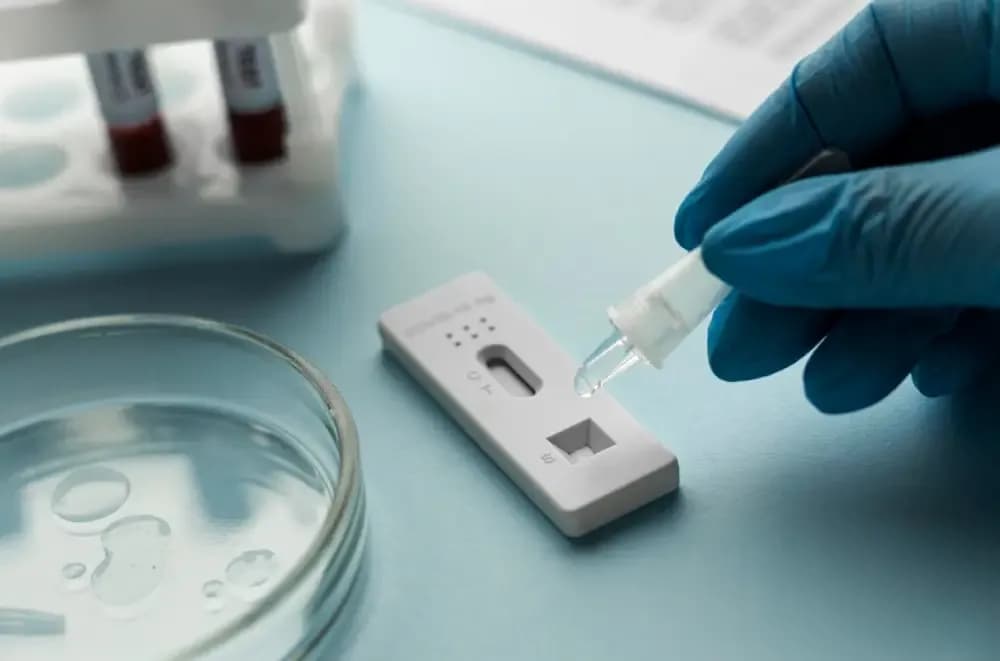
A rapid diagnostic test (RDT) for malaria identifies specific proteins released by malaria parasites in your blood. Think of it as a quick screening tool. A small blood sample is placed on a test cassette. Within 15 to 20 minutes, coloured bands appear on the card to show whether an infection is present.
Compare that with a traditional peripheral blood smear, where a lab technician examines your blood under a microscope. Smears are highly accurate but take longer. The RDT fills an important gap, especially in smaller towns or clinics without advanced lab equipment. It gives doctors a fast, reliable starting point for diagnosis.
How Does Malaria Antigen Test Detection Work?
Malaria antigen test detection relies on lateral-flow technology, similar to a home pregnancy test. The cassette contains antibodies that react with specific parasite proteins. When these proteins are present, visible bands appear on the test strip.
Modern RDTs can identify three different parasite antigens: aldolase, lactate dehydrogenase, and histidine-rich protein 2.
Target 1: HRP-2 (Histidine-Rich Protein II)
The HRP-2 antigen is a protein released specifically by Plasmodium falciparum. This species is responsible for the most dangerous form of malaria. When infected red blood cells block blood vessels in the brain, it can lead to severe cerebral malaria. Detecting HRP-2 early helps doctors identify this high-risk infection quickly.
Target 2: pLDH (Parasite Lactate Dehydrogenase)
pLDH is an enzyme produced by multiple malaria species. It is particularly useful for detecting Plasmodium vivax, which is the most common malaria species in India. Unlike HRP-2, pLDH levels drop quickly after successful treatment. This makes it a helpful marker for monitoring recovery.
What Is the Malaria Antigen Test Normal Range?
Unlike a blood sugar or cholesterol report, a malaria antigen test has no numerical range. It is purely qualitative, meaning the result is either positive or negative.
A positive result means parasite antigens were found. A negative result means none were detected at the time of testing. Microscopy is still needed to identify the exact species and count the parasite density in your blood.
Your doctor can guide you on whether further testing is necessary based on your symptoms.
How Should You Read Malaria Antigen Test Reports?
Malaria antigen test reports can look confusing at first glance. The table below breaks down each possible band pattern:
| Band Visible | What It Means |
|---|---|
| Control line only | Negative; no malaria antigens detected |
| Control + Pf line | Positive for P. falciparum infection |
| Control + Pv line | Positive for P. vivax infection |
| Control + Pf + Pv lines | Mixed infection with both species |
| No control line | Invalid; test must be repeated with a fresh cassette |
If your report shows no control line, the test must be repeated with a fresh cassette. An invalid result does not mean positive or negative; it simply means the test failed.
What Affects the Accuracy of Your Results?
Several factors can influence how reliable your RDT result is:
- Low parasite density: Early in the infection, parasite counts may fall below the test's parasite detection limit of roughly 100 parasites per microlitre. This can produce a false negative.
- Lingering HRP-2 after treatment: The HRP-2 protein can remain in your bloodstream for weeks after successful treatment. This may trigger a false positive even when the infection has cleared.
- Storage and handling: Extreme heat or expired kits can compromise results.
A single negative RDT does not rule out malaria. If high fevers persist, your doctor may recommend a follow-up peripheral blood smear or repeat testing.
Malaria Antigen Test Price: What Does It Cost?
The malaria antigen test price in India generally ranges from ₹200 to ₹600 at private laboratories and hospitals. Costs vary by city and lab brand. Government health facilities under the national vector-borne disease programme often provide rapid malaria screening at little to no cost.
If you are getting tested at a private diagnostic centre, it helps to compare prices. Many labs also offer combo fever panels that bundle malaria, dengue, and typhoid tests together.
Conclusion
A rapid antigen test is a fast, affordable first step. However, a negative rapid test does not always rule out malaria, especially early in the infection. Confirming results with a peripheral blood smear remains the gold standard when clinical suspicion is high. Early detection truly makes the difference.
If you or a family member needs a malaria test or a broader fever panel, Lupin Diagnostics offers reliable testing at NABL-accredited labs with home collection options across India.
FAQs
Can a malaria antigen test tell me exactly how many parasites are currently present in my blood?
It cannot. RDTs are qualitative and only show whether parasite antigens are present or absent. To count actual parasite numbers, a microscopic blood smear examination is needed.
Why did my malaria rapid antigen test show a positive result even though I completed my medication last week?
The HRP-2 protein can stay in your blood for several weeks after successful treatment. A positive result after completing medicines does not necessarily mean you still have an active infection. Your doctor may recommend a follow-up blood smear to confirm.
Does a patient need to fast or stop taking specific medications before undergoing a malaria blood draw?
There is no special preparation required. You can eat, drink, and continue your regular routine before the test. Always follow specific instructions provided by your doctor or laboratory.
What should be my immediate next step if a rapid antigen report comes back marked as "Invalid"?
An invalid result means the test cassette did not work properly. Ask your lab or healthcare provider to repeat the test using a fresh kit.
Is the rapid antigen test capable of detecting all five species of malaria parasites that can infect humans?
Five species cause malaria in humans. Most RDTs specifically detect P. falciparum through HRP-2 and may detect other species using pan-Plasmodium antigens like pLDH. However, they may not reliably distinguish between all five species individually.
How many days after a mosquito bite will malaria antigens become detectable by a rapid blood test?
The incubation period generally ranges from 7 to 30 days. P. falciparum tends to become detectable sooner, while P. malariae may take longer. Testing too early after a bite can produce a false negative.
This article is for informational purposes only and does not substitute professional medical advice, diagnosis, or treatment. If you suspect malaria or have a persistent fever, please consult a qualified healthcare provider promptly.
Featured Articles
Diabetes Screening For Diagnosis And Prevention
Posted on: 25th Oct 2023

Eating To Recover: The Best Foods For Getting Back On Your Feet After Cholera
Posted on: 22nd Jan 2026

What A Complete Blood Count (CBC) Tells You About Your Health
Posted on: 22nd Jan 2026