E2 (Oestradiol) Test
About E2 (Oestradiol) Test
| Field | Value |
|---|---|
| Also Known As | Oestradiol test, 17 beta-oestradiol test, and serum oestradiol test |
| Sample Type | Serum (venous blood) |
| Fasting Required | No fasting required |
| Report Time | 1 day |
| Recommended For | Males and females of all ages |
| Price | Starting at ₹650 |
What is an E2 (oestradiol) test?
The E2 test measures the level of oestradiol (a naturally occurring human oestrogen or simply a female sex hormone) in the blood. It is used to evaluate reproductive health, diagnose hormone-related conditions, and monitor fertility treatments. The required sample is a small amount of blood drawn from a vein. This test is also called the oestradiol test, 17 beta-oestradiol test, and serum oestradiol test.
What does an E2 (oestradiol) test measure?
The E2 test measures a single parameter: oestradiol (E2). Here is what this hormone does and why measuring it matters.
| Parameter | What It Tells Us |
|---|---|
| Oestradiol (E2) | The primary form of oestrogen, which regulates the menstrual cycle, supports follicle development and ovulation, maintains bone health, and is essential for reproductive function in both females and males |
Why is an E2 (oestradiol) test done?
A doctor may request this test for several reasons, from routine hormone checks to investigating specific symptoms.
Common symptoms that may necessitate this test
The following symptoms are among the most common reasons a doctor will recommend an oestradiol test.
- Irregular or absent menstrual periods
- Hot flushes and night sweats
- Problems in conceiving
- Vaginal dryness or dehydration
- Breast tenderness
- Unexplained mood changes
- Breast tissue growth in males (gynaecomastia)
Conditions this test can help detect
This test can help identify a range of hormonal and reproductive conditions.
- Polycystic ovarian syndrome (PCOS), a hormonal disorder affecting ovarian function
- Infertility and ovulatory disorders
- Primary ovarian insufficiency (premature ovarian failure before age 40)
- Hypogonadism (underactive ovaries or testes)
- Early or delayed puberty
- Oestrogen-producing ovarian or adrenal tumours
- Assessment of menopausal status
E2 (oestradiol) for chronic disease monitoring
Oestradiol is one of the heavily tracked hormones during in vitro fertilisation (IVF) because its levels indicate how well the ovaries are responding to stimulation. Regular monitoring helps doctors time ovulation accurately and adjust treatment as needed. Women receiving hormone replacement therapy for menopause may also have their oestradiol levels checked periodically to confirm that hormone balance is being maintained.
How to prepare and what to expect
Do you need to fast?
No. Fasting is not required before this test. You may eat and drink as usual on the day of your appointment.
Practical tips before your test
Keep the following points in mind before going for your E2 test procedure.
- Bring a detailed clinical history, including your symptoms, previous test results, and relevant medical records, as it is required for the test.
- Tell your doctor about all medications, supplements, and birth control pills you are currently taking, as these can affect your results.
- Stop taking high-dose biotin (vitamin B7) supplements at least 72 hours before sample collection, as biotin can interfere with the test.
- If you have a regular menstrual cycle, your doctor may ask you to come on a specific day; day 3 of the cycle is often used for fertility assessment.
- Wear a short-sleeved or loose-fitting top to make blood collection easier.
Step-by-step procedure
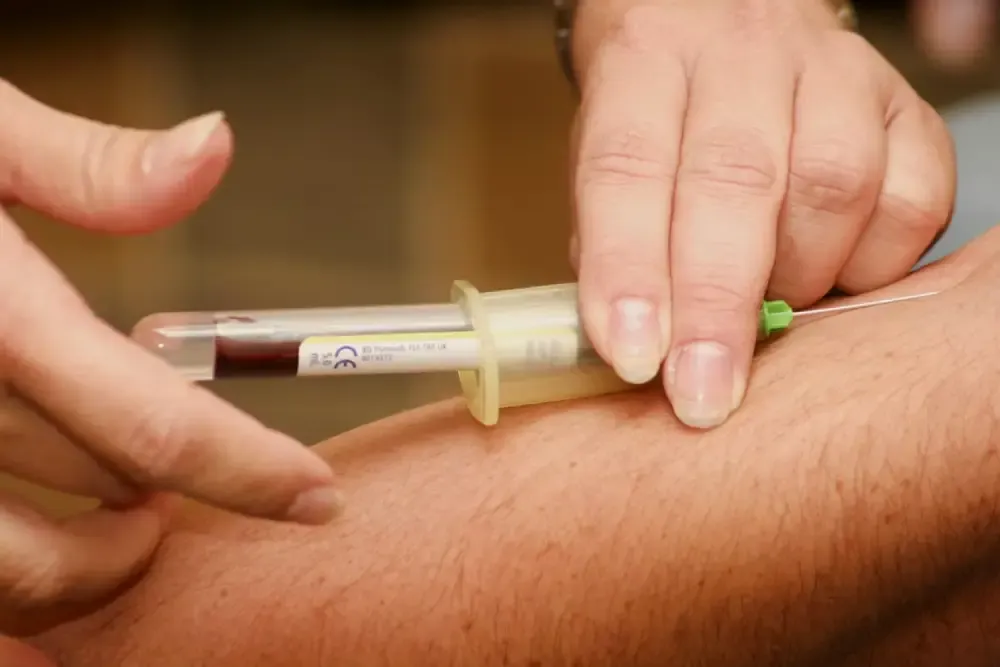
- A trained phlebotomist will clean the inner elbow area with an antiseptic solution.
- A tourniquet (elastic band) is tied around your upper arm to make the veins easier to locate.
- A fine needle is inserted into a vein to draw a small blood sample of approximately 3 ml.
- The blood is collected into a special gel tube. The process takes only a few minutes, and you may feel a brief, mild pinch.
- The tourniquet and needle are removed; a small cotton swab or bandage is placed over the site.
- The labelled sample is stored under refrigeration and sent to the laboratory for analysis.
Factors that can affect accuracy
Several factors can influence the reliability of your oestradiol test result.
- High-dose biotin supplementation
- Hormonal medications, including contraceptive pills and oestrogen therapy
- The specific day of your menstrual cycle when the sample is collected
- Time of day, as hormone levels can fluctuate throughout the day
- Recent physical or emotional stress
- Ongoing illness or recent infection
- Use of certain medications may interfere with the test results.
Understanding your E2 (oestradiol) results
Your doctor will review your 17 beta-oestradiol test results alongside your clinical history, symptoms, and other tests before drawing any conclusions. The table below gives general reference ranges.
| Group | Normal Range | Unit |
|---|---|---|
| Females: Follicular phase (first half of cycle) | 20-350 | pg/mL |
| Females: Ovulatory phase (mid-cycle) | 150-750 | pg/mL |
| Females: Luteal phase (second half of cycle) | 30-450 | pg/mL |
| Postmenopausal females | Less than 10 to 30 | pg/mL |
| Males | 10 to 50 | pg/mL |
| Pregnancy: 1st trimester | 188 – 2,497 | pg/mL |
| Pregnancy: 2nd trimester | 1,278 – 7,192 | pg/mL |
| Pregnancy: 3rd trimester | 6,137 – 3,460 | pg/mL |
These ranges are general guidelines. Your doctor will interpret your results based on your age, health history, and other factors. Always consult a qualified healthcare professional for personalised medical advice.
Results during special conditions
Certain situations can shift oestradiol readings away from the expected range.
- High-dose biotin supplements can falsely raise oestradiol levels, so stopping biotin at least 72 hours before the test is recommended.
- Pregnancy causes a significant rise in oestradiol, so pregnancy-specific reference ranges apply.
- Oral contraceptives and hormone replacement therapy directly alter oestregen levels, which will be reflected in results.
- The drug Fulvestrant (Faslodex) may produce falsely elevated readings.
How to maintain healthy levels
These general wellness tips support healthy hormone balance.
- Maintain a healthy weight through balanced, nutritious eating, as oestrogen is partly produced in fat tissue and excess body weight can affect levels.
- Limit alcohol consumption and avoid smoking, both of which can disrupt hormonal balance.
- Manage stress through adequate sleep and relaxation practices, as prolonged stress can interfere with hormone production.
Lupin Diagnostics E2 (oestradiol) test price and home collection
The E2 test cost at Lupin Diagnostics starts at ₹650, and home collection is available across cities for your convenience.
| City | Approximate Price ( ₹) |
|---|---|
| BHOPAL | 650 |
| CHENNAI | 600 |
| HYDERABAD | 600 |
| KOLKATA | 700 |
| NAVI MUMBAI | 650 |
| PUNE | 650 |
Prices are indicative and may vary by location. Please confirm the current price at the time of booking.
How to book
- Select the E2 (oestradiol) test on the Lupin Diagnostics website.
- Choose your city and preferred time slot.
- Opt for E2 test home sample collection by a certified phlebotomist, or visit your nearest Lupin Diagnostics centre.
- Receive your report via email or WhatsApp within the stipulated turnaround time.
Home collection
Lupin Diagnostics offers E2 test home collection across multiple cities, so you can have your sample collected from the comfort of your home. All samples are processed in NABL-accredited laboratories. Your digital report is shared promptly once ready.
Frequently Asked Questions
The serum oestradiol test (E2 test) measures the level of oestradiol, the main active form of oestrogen, in the blood. It helps assess reproductive health, investigate menstrual irregularities, evaluate fertility, and diagnose hormone-related conditions in both females and males.
No fasting is required. You can eat and drink normally before your E2 test procedure. There are no dietary restrictions on the day of collection.
The ideal timing depends on the reason for the test. Day 3 of the menstrual cycle is commonly used for fertility assessments, especially to evaluate ovarian reserve. For menopause evaluation, the timing of the cycle is less important. Your doctor will advise the most appropriate day.
Yes. Birth control pills, oestrogen therapy, and other hormone treatments can influence oestradiol levels. Always inform your doctor about all medications and supplements you are taking, including biotin, before the test.
In males, the oestradiol test is used to investigate conditions such as delayed puberty, gynaecomastia (breast tissue growth), and infertility, which may result from excess oestrogen. It is an important part of a male hormone evaluation when these symptoms are present.
Reports for the E2 test are typically available within 1 day of sample collection at Lupin Diagnostics. Results are delivered digitally via email or WhatsApp.
Low oestradiol levels may be associated with menopause, primary ovarian insufficiency, hypogonadism, or other conditions affecting hormone production. Symptoms can include irregular periods, hot flushes, reduced bone density, and mood changes. Your doctor will assess the cause and advise next steps.
E2 (Oestradiol) Test